Scan the dice in a fixed order

Group equal values, sort the remaining values mentally, and note the highest die. The same scan catches pair-based hands, straight possibilities, and the fallback high-die result without repeatedly re-reading the board.

A fixed order also makes skull conditions easier to notice because you are not changing the interpretation after every roll.

Dice of Kalma board showing a five-die result and one reroll
Sorting the visible values mentally exposes repeated numbers and gaps in a sequence.

Compare reachable hands

Count the number of dice that must change for each candidate hand. A target requiring one change is usually a better practical line than one requiring three, unless skulls or upgrades make the harder result uniquely valuable.

Keep the level threshold in view. The best reachable hand is the one that advances the run, not necessarily the rarest named pattern.

  • Made hand now
  • One-die improvement
  • Two-die improvement
  • Fallback if both miss

Use High Die as information

A high-die result may be a fallback, but it also tells you the roll did not form a stronger pattern. If the same fallback appears repeatedly, the build may lack a reliable hand plan or may be holding too many unrelated dice.

Review the next upgrade and skull choice with that pattern in mind instead of blaming the random roll alone.

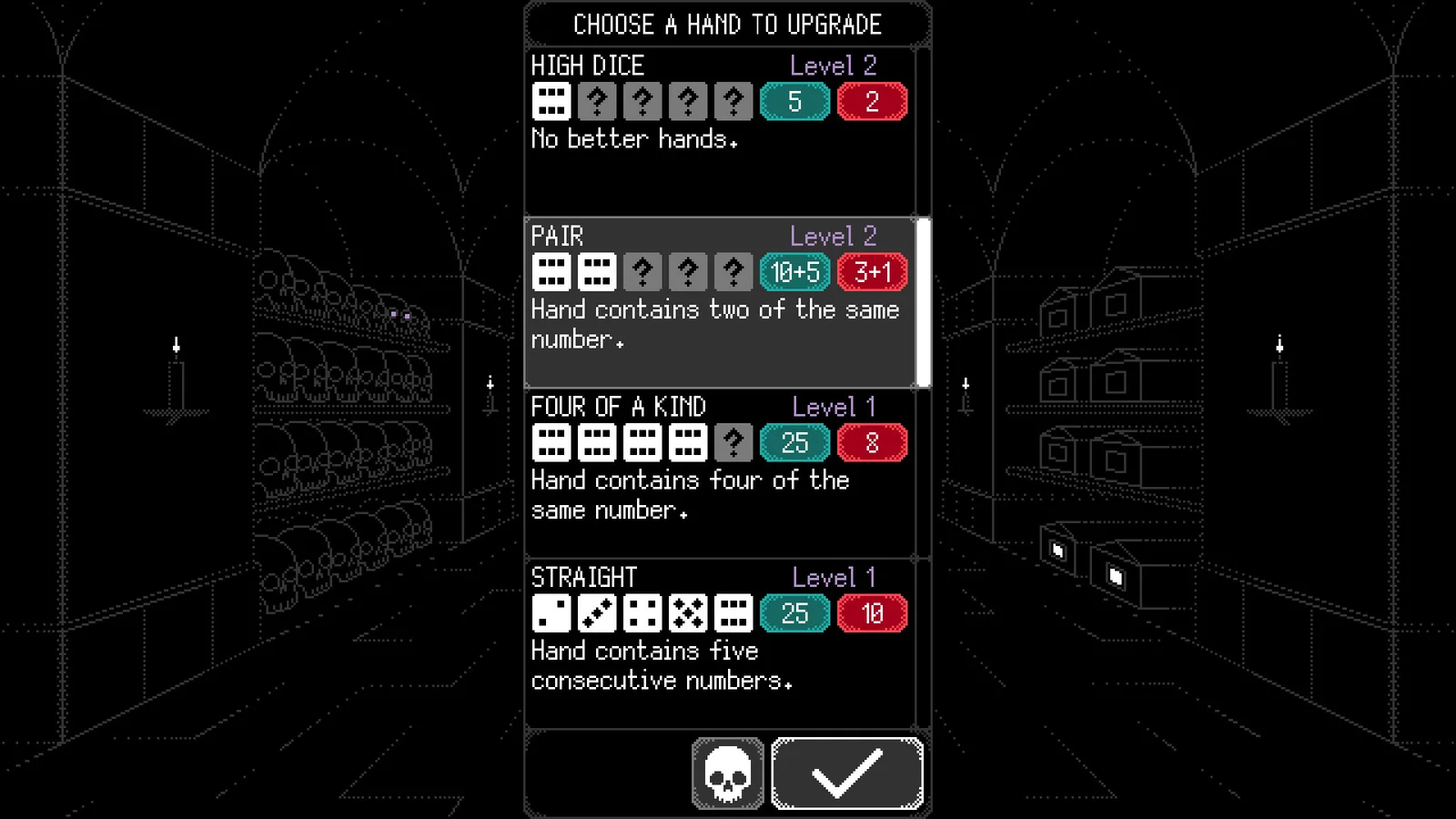
Hand upgrade menu showing High Die and other poker hands
The upgrade list makes the gap between a fallback and a committed hand visible.

Sources

Official Dice of Kalma Steam store page

Official Dice of Kalma App Store listing and version history

Pocket Gamer beginner guide