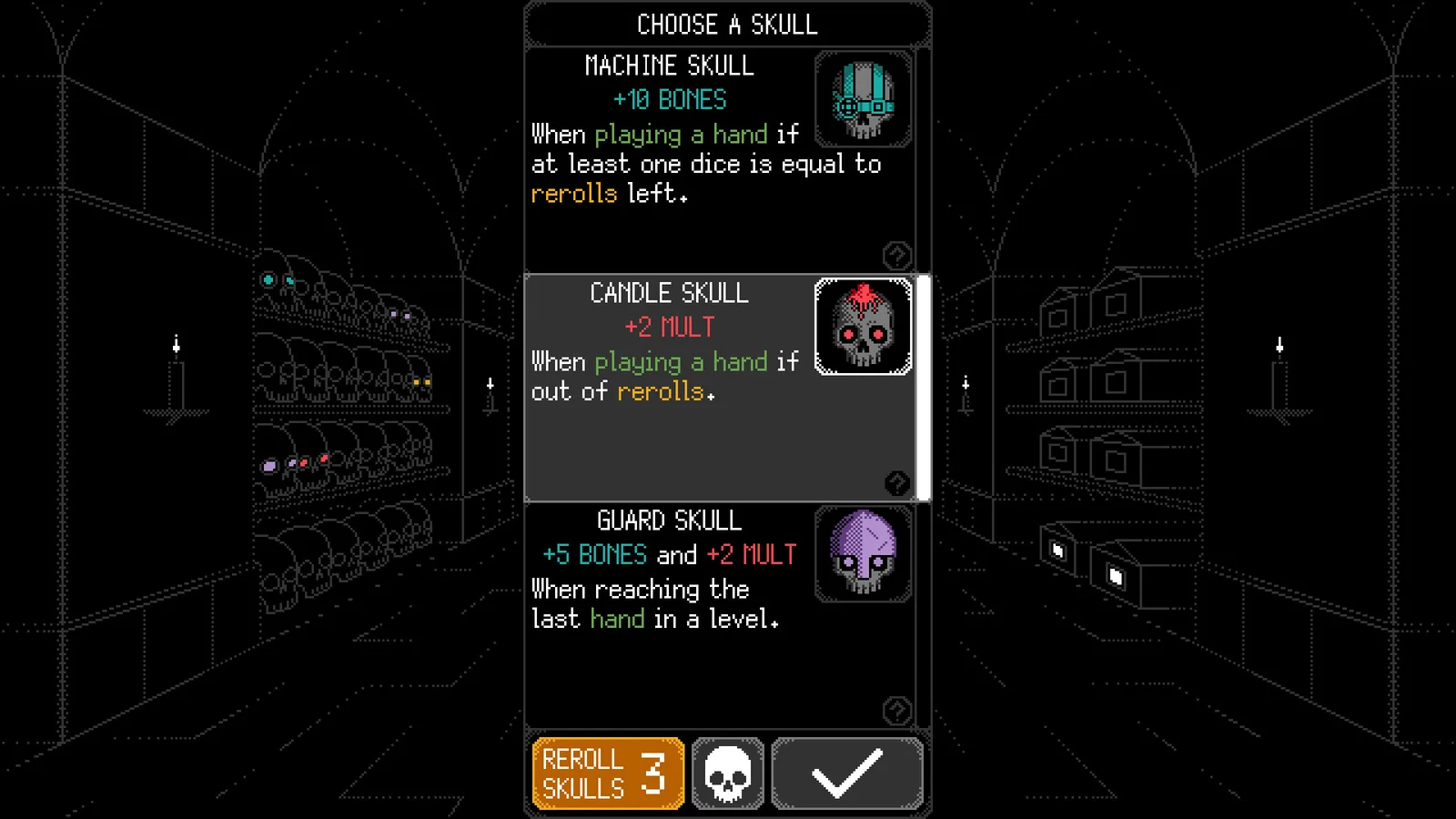
Start with activation rate
Count how often the skull could have activated across the last few hands. A large reward with a rare condition may contribute less than a smaller effect that your normal play triggers repeatedly.
This is especially important while learning. A reliable skull gives clear feedback, whereas a complicated conditional effect can make it hard to understand why a level succeeded or failed.
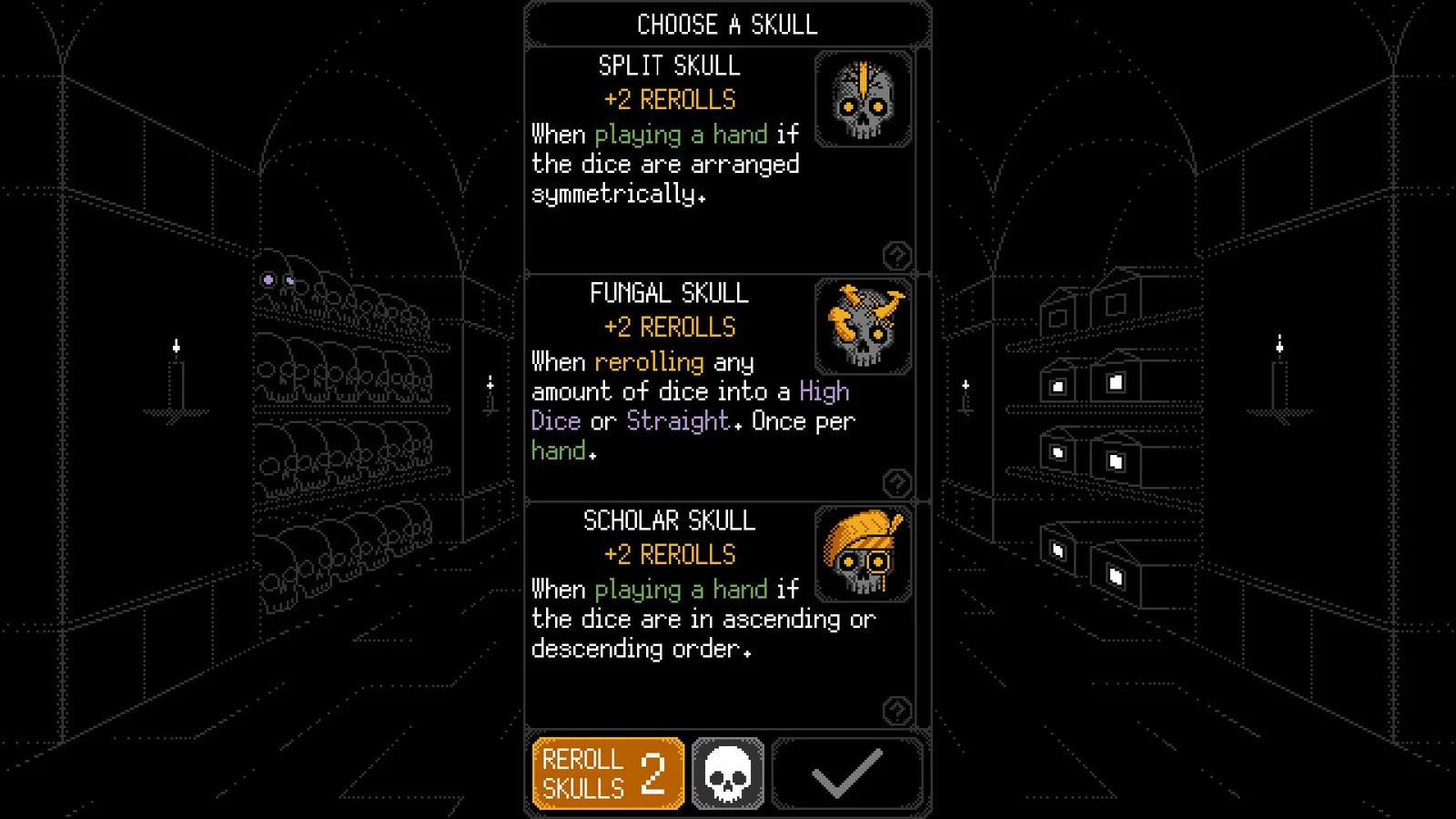
Score the fit, not the name
Compare each option against the hand upgrades already taken, the skulls already owned, the remaining reroll economy, and the current mode. A hand-specific skull improves when that hand is already part of the run.
Avoid rating a skull from a single high-score screenshot. A useful comparison includes several levels and records both activations and missed triggers.
- How often can it trigger?
- Does it reward the current hand plan?
- Does it compete for rerolls?
- Does the mode change its value?
- Was it checked on this version?
Re-rank when the mode changes
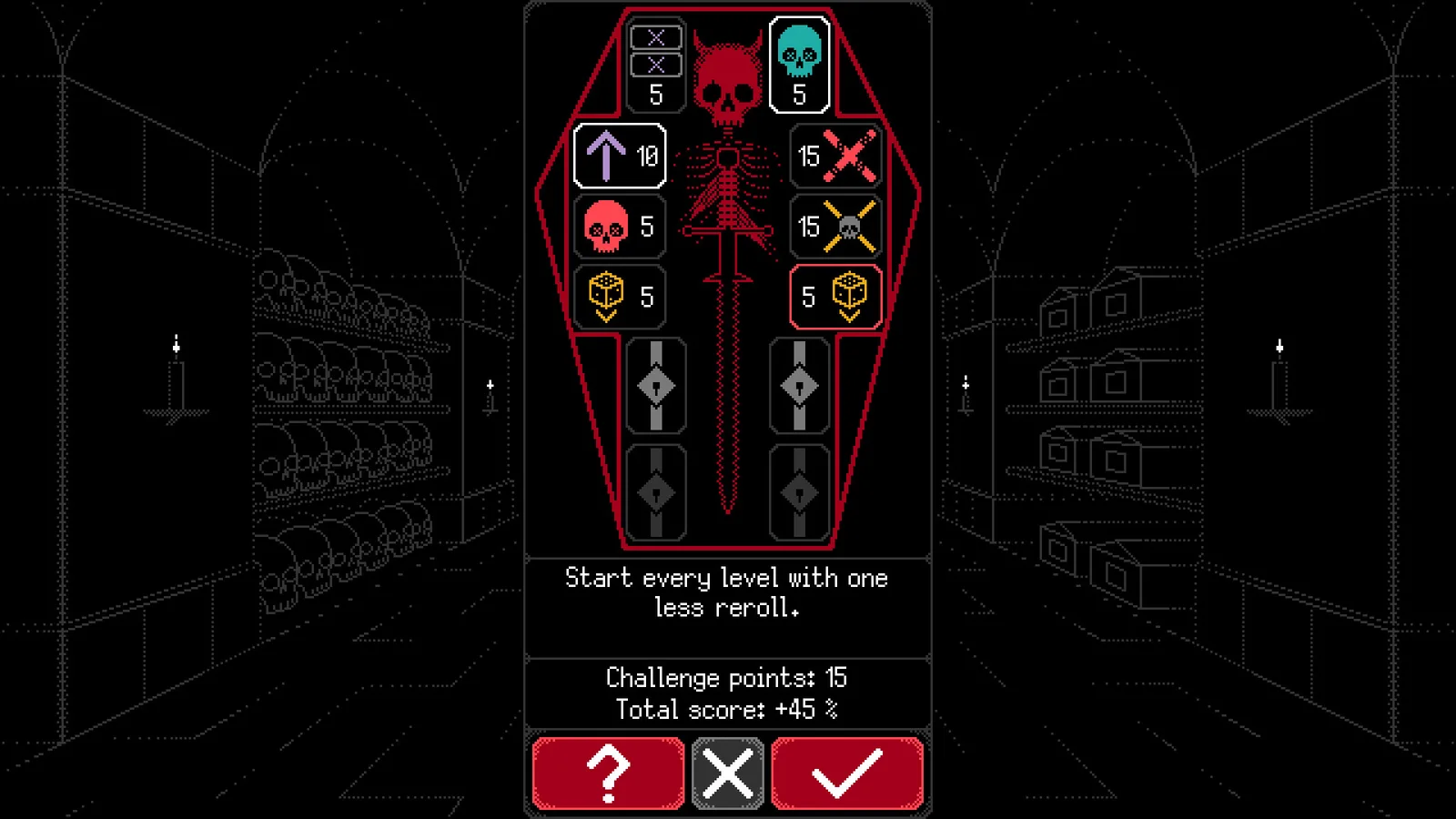
Daily, Endless, and challenge modifiers can change starting resources and the cost of inconsistency. A skull that is forgiving in a normal run may be awkward when hands or rerolls are constrained.
Keep mode-specific notes rather than one universal ranking. That creates a decision aid players can actually use instead of a list that goes stale after the next patch.
Sources
Official Dice of Kalma Steam store page →
Official Dice of Kalma App Store listing and version history →