Sort the values before you hold
Mentally place the dice in ascending order. A duplicate inside an otherwise clean sequence is easier to fix than a board with several disconnected values.
Choose the sequence that preserves the most dice. Do not hold a visually pleasing cluster if a different range needs fewer changes.
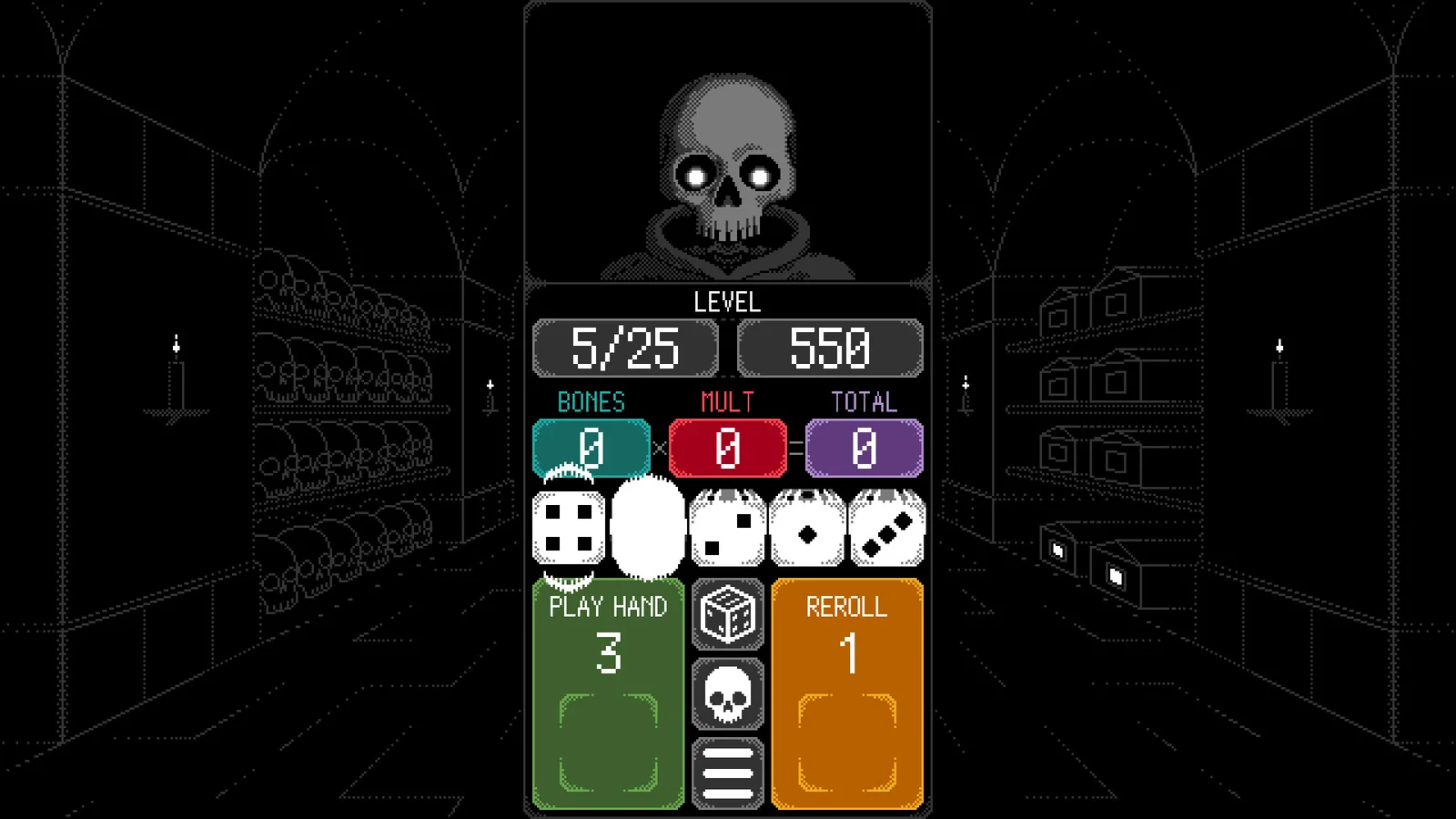
Keep a fallback hand
A failed straight attempt should still leave a playable result when possible. Pair-based fallbacks are useful when the rerolled die lands on a held value. High Die requires both 1 and 6; do not assume the highest die alone provides a fallback.
If a skull rewards a fallback, include that in the plan before the roll rather than discovering it after the straight misses.
- Primary sequence
- Missing value or values
- Duplicate value
- Fallback hand
- Relevant skull trigger
Know when the straight is too expensive
Stop chasing when several dice must change, the remaining rerolls activate another skull, or the current made hand already clears the level. A build that consumes every resource on ordinary thresholds will struggle later.
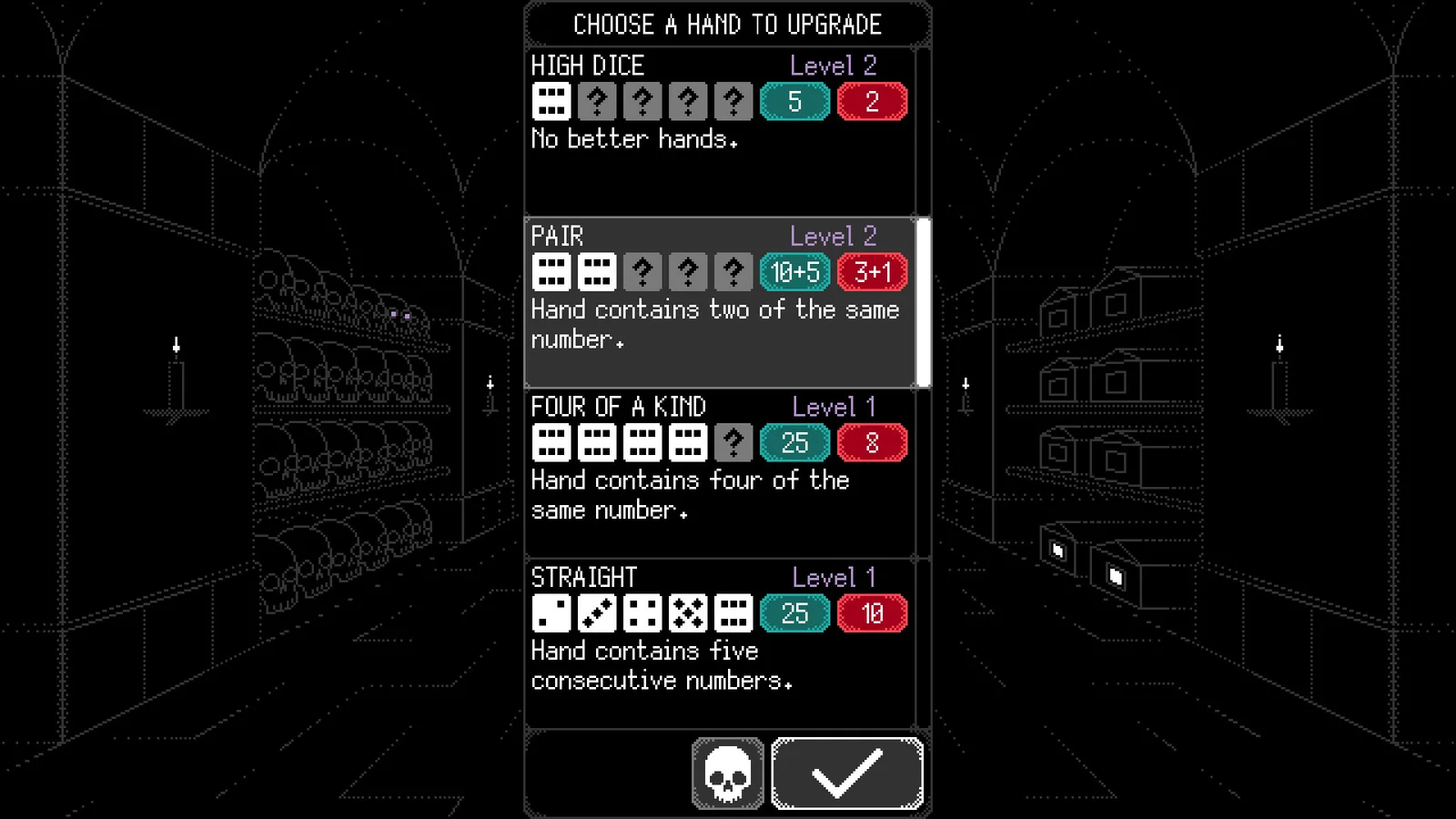
Review the hand upgrade screen after a successful sequence. If straights are now a core line, the upgrade should reinforce a pattern you have already demonstrated.
Sources
Official Dice of Kalma Steam store page →